
Intelligence
Intelligence for a changing planet

Research and Reports
Research in the public interest
Planetary Solvency translates complex evidence into decision-relevant insight. While scientific research provides essential knowledge about the changing Earth system, risk management adds a different but complementary question: what could happen, how bad could it be, and what should we do about it?
Our research examines these questions and probes how leaders should respond.
Since 2022, the team behind Planetary Solvency has produced a series of reports, sponsored by the Institute and Faculty of Actuaries (IFoA), combining actuarial risk analysis with the latest Earth system science.
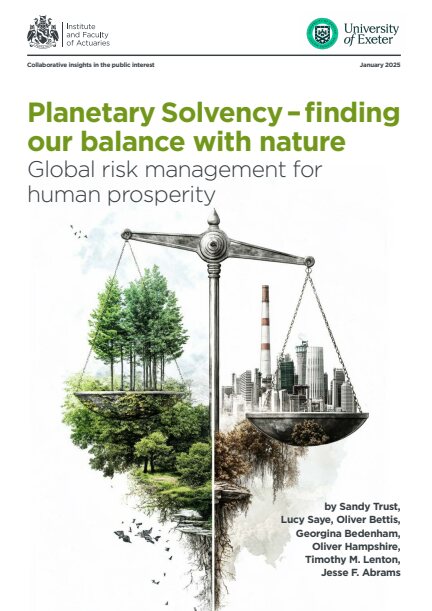
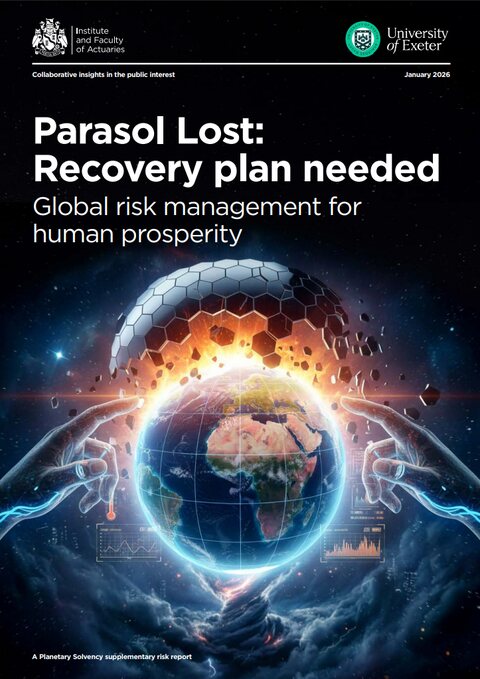
These publications, written in collaboration with leading Universities, examine the conditions needed for lasting human prosperity, the risks created by destabilising the Earth system, and the practical choices available to reduce those risks. Each of the reports starts from a question:
-
-
-

-
-
-
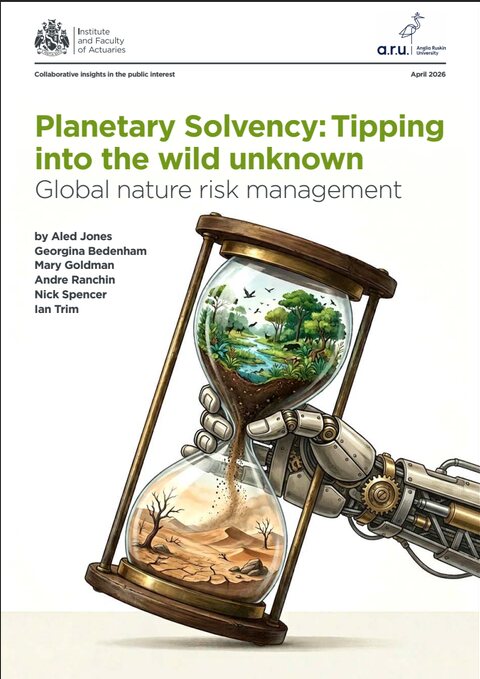


Coming Up: Focus on Oceans
New report: We are currently collaborating with the ocean science community to build the direct link between ocean health and financial stability. This report, which will evidence why pension scheme asset allocation must include systemic risk and tipping point mitigation, launches in November.
AMOC2029
AMOC 2029: When the sea slows, produced in association with the Strategic Climate Risks Initiative, the Accelerator for Systemic Risk Assessment, and the University of Exeter, is an interactive narrative resource tracking the years one fictitious government spends bracing for the slowdown of the Atlantic’s overturning circulation.
Planetary Risk Dashboard In development
The Planetary Risk Dashboard is an actionable visualisation of real-time risks across climate, nature, society and economic sectors. The illustrative global dashboard has been pioneered in partnership with the University of Exeter and the IFoA.
Planetary Solvency Informed Scenarios In development
We are collaborating on a scenario explorer for national and financial institution planetary solvency scenarios. The systemic risk scenario is being developed with the Climate Financial Risk Forum, with around 40 financial institutions and a number of leading academics contributing.
PS Recovery Plan
We are at a ‘break glass’ moment for climate change. Emergency action is required to stabilise the climate system, and to implement equivalent risk management practices to those that protect financial stability.
In ‘Parasol Lost: Recovery plan needed’, we pointed to the need for Governments and other stakeholders to execute a Planetary Solvency recovery plan, identifying quick wins, emergency brakes and options to change our trajectory away from the high risk zone.
The takeaway for policymakers is that to avoid planetary insolvency, they must urgently implement a fundamental, policy-led change of direction, informed by up-to-date information on what is happening, what is likely, the risks associated with ongoing global warming and a willingness to address the root causes of the problems we face.
The message is that action is required to radically accelerate societal adaptation to a changing climate, supercharge the pace of the energy transition to reduce fossil fuel use and emissions, and remove excess greenhouse gases already in the atmosphere: with the kicker that it will be overwhelmingly positive economically to do so.